

Fiji
Fiji is not what I thought it would be.
I imagined beaches and palm trees. You may imagine the same things. The authoritative Google image search verifies that Fiji is basically beaches and palm trees. So that’s what I imagined before boarding our plane about a month ago.
Imagine my surprise when I was told that Suva, Fiji’s capital and our outreach location, has no beaches. How could that be, I thought to myself. There’s water all around us. But no beaches. It’s like a riddle.
The riddle of Fiji is only for the Westerners coming here. In fact, it’s only a riddle for Westerners who come here and branch out beyond the white sand beach resorts in Nadi. For the regular tourists, Fiji is indeed beaches and palm trees. The regular experience is disembarking the plane, finding a representative from the resort near the exit of the airport, and being whisked away to get some rest before a long 7 to 10 days of more rest around the pool looking at the waves of the South Pacific.
There’s nothing wrong with that. Nothing at all.
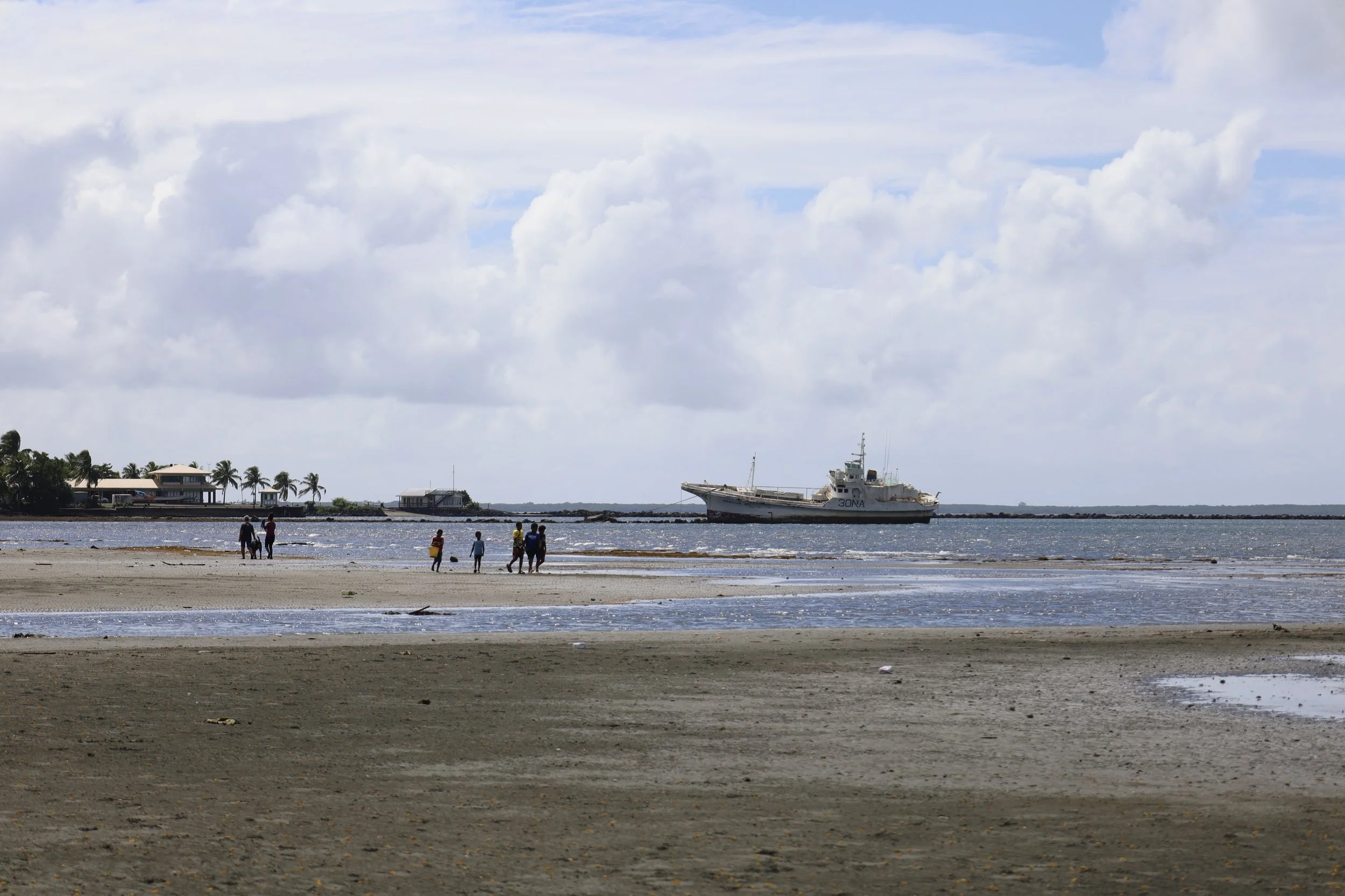
As close as Suva gets to having a beach…
But we are on a different track. After disembarking the plane, we spent a night at a hotel and then took a four-hour bus ride with a group of Christian families to the other side of the island. In case you didn’t know, Fiji has a lot of islands, over 300, but the main one is the one we are on – Viti Levu. The other big one is a short flight away. And then there are about a dozen that a person can fly to on smaller planes on less frequent schedules. Most of the other islands are inaccessible but by boat or other private arrangements.
But we are in Suva. As I mentioned, it’s the capital.
It is a wild and wonderful city. It’s foreign to a Western Canadian like me. I’m used to pine trees.
Presently, I am writing on my laptop in the corner of a café and drinking a “long black,” which is essentially an Americano but everyone in New Zealand and here calls it a long black. There are sugar packets on the saucer from a company called Bundaberg. I learned about Bundaberg in NZ when I discovered that company’s next-level ginger beer (aka ginger ale) and other soft drinks. There is no Wi-Fi. I can access the internet usually through a SIM card from Digicel. It is not working here so I’m invisible to the electronic world. In the background, there are two men talking in English and Fijian. There’s music on the speaker and it’s Hindu. There’s a huge Indian population here in Fiji with a long and interesting history I’ve yet to learn. One of the employees frequently accesses videos on her phone at full volume, so the constant stream of conversation and Hindu music is intermittently punctuated with obnoxious background music from an Instagram reel or YouTube short from her phone.
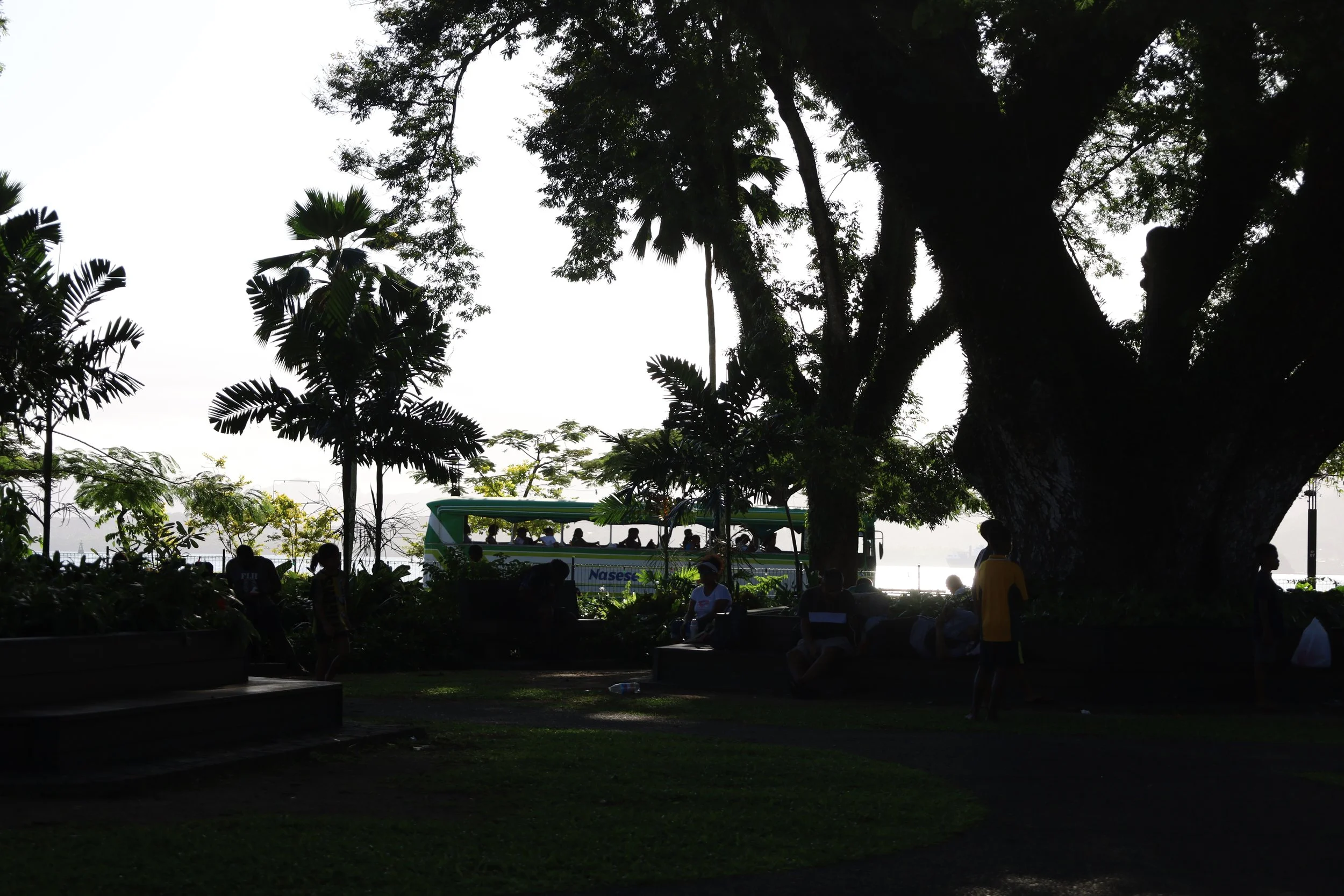
It is pouring rain outside. I’m as dry as a bone. I got here before the rain. The view from the window is palm trees resting idly under the rain with buildings underneath and a road beside those buildings. I can see a mosque peeking out from behind a sign. The other buildings are commercial and generally run-down by Canadian standards. They’re not particularly colourful. The traffic on the road consists of personal vehicles, beautifully painted public buses (no glass windows in them), and taxis. A lot of taxis.
We’ve gotten used to them.
I found that we got used to things quickly, maybe too quickly.
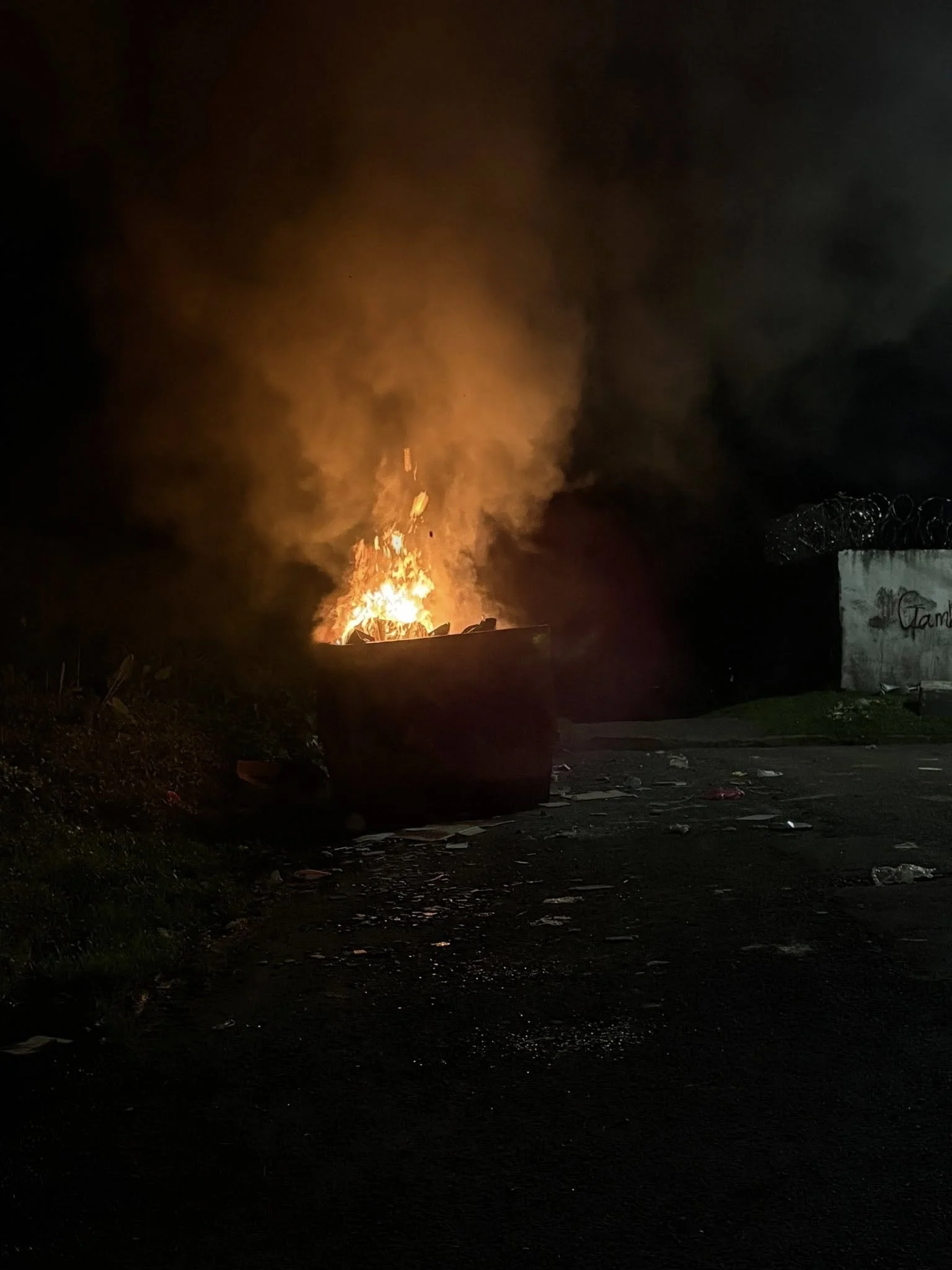
A couple of nights into the outreach, someone set a dumpster on fire at the end of our street. The toxic smoke blew over to our house. It did that for a couple of days at least and then stopped. It was lit on fire again a week later. It’s the neighbourhood’s trash disposal, even though we have regular trash pick-up. Those fumes can cause permanent damage obviously and initially we were all shocked. Then we learned to close the windows.
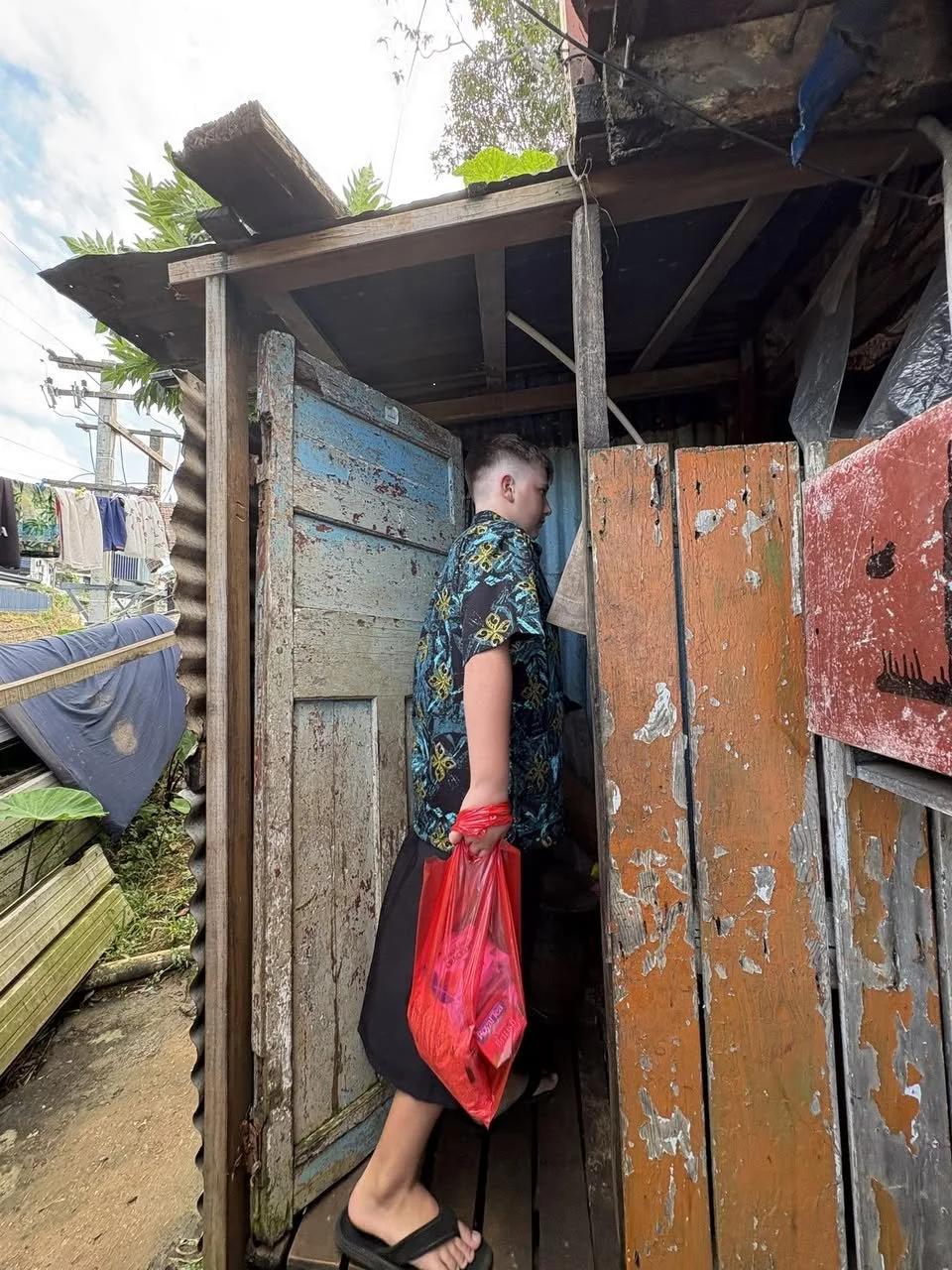
What still feels new and startling, at least to me, are the glances we get into the life of the lower classes here. Back home, I spent some time visiting our local tent city and distributing food with some good people to the homeless downtown, so there’s no illusion that we have it all together. But in Suva, we visit settlements, villages, and what we would normally call slums. Those visits are as eye-opening of an experience as anything we’ve ever done.
Twenty years ago, Leona and I spent 10 weeks in Chennai, India, and the eye-opening was so substantial that we remember it to this day. Leper colonies, AIDS hospices, orphanages, street kids’ homes…and the villages with thatched-roof cottages and livestock freely wandering throughout…yeah, it was memorable.
But it’s been twenty years. Memories can fade.
In Canada, I have a refrigerator where I can put a glass and fill it up with fresh water, or cubed ice, or crushed ice. There’s even a feature for filling up a bottle. You can press a button and leave your bottle there. You don’t have to hold down a button the entire time, since that would be a major inconvenience. You do have to press the button again to stop the flow of water but at least you don’t have to hold it down for 20-25 seconds like a peasant.
We got used to Canadian life.
And now we have kids.
So, we did not know what the kids would be like here. I’m happy to report that our kids are rising to the occasion and we are all being baptized or re-baptized into the reality that the Western world is not like the rest of the world.
The wider world is not very much like Supernatural British Columbia. The massive swaths of uninhabited land in B.C. and the towering peaks of mountain ranges are far away right now.
Fiji ranks 158th for GDP (PPP) in the world and their entire economy is $15 billion USD. A short walk from our mission house is Jittu Settlement, which is known as one of the city’s poorer areas. Houses are constructed of corrugated tin, planks, plastic tarps, and other miscellaneous materials. There is no discernible irrigation system. The homes are constructed on uneven ground and the floors are often sloped and covered by mats. You can tell when you walk barefoot on the mats that there is often only dirt underneath. I also did not notice many power outlets or extension cords but there is some access to electricity since I saw a washing machine running outside of one of the homes. It had no lid and the grey water inside was swirling and swirling around as the machine rocked back and forth. Most of Suva is not like that at all. There’s remarkable colonial architecture everywhere, a lovely shoreline, and an eclectic population. There are not a lot of white people, although I did see more than the usual amount at a rugby match for the Fijian Drua last week.
One of these days, our family will be back in British Columbia. We will exhale after a long journey and feel the cold nip of the air in January. I bet we will adapt quickly, as that seems to be what people do. We will be back in the land of mountains and pine trees and refrigerators that dispense crushed ice on demand. Fiji will be thousands of miles away and be “one of the countries” we visited on our 2026 grand adventure.
But we will remember.
With four of the five kids here, all at different ages, I expect the memories will differ from child to child. Maybe some will recall the settlements most or the Kids Clubs or the other people on the team. I hope our youngest ones remember celebrating their birthdays here and drinking milk straight from coconuts plucked from the trees. My biggest hope is that they remember the diversity that exists on planet earth. I hope Fiji is a transformative place for our kids and, watching them day by day interact with the world around them, I can already see green shoots of that transformation.
Dawson
